
Framewrk’s MVP Launch
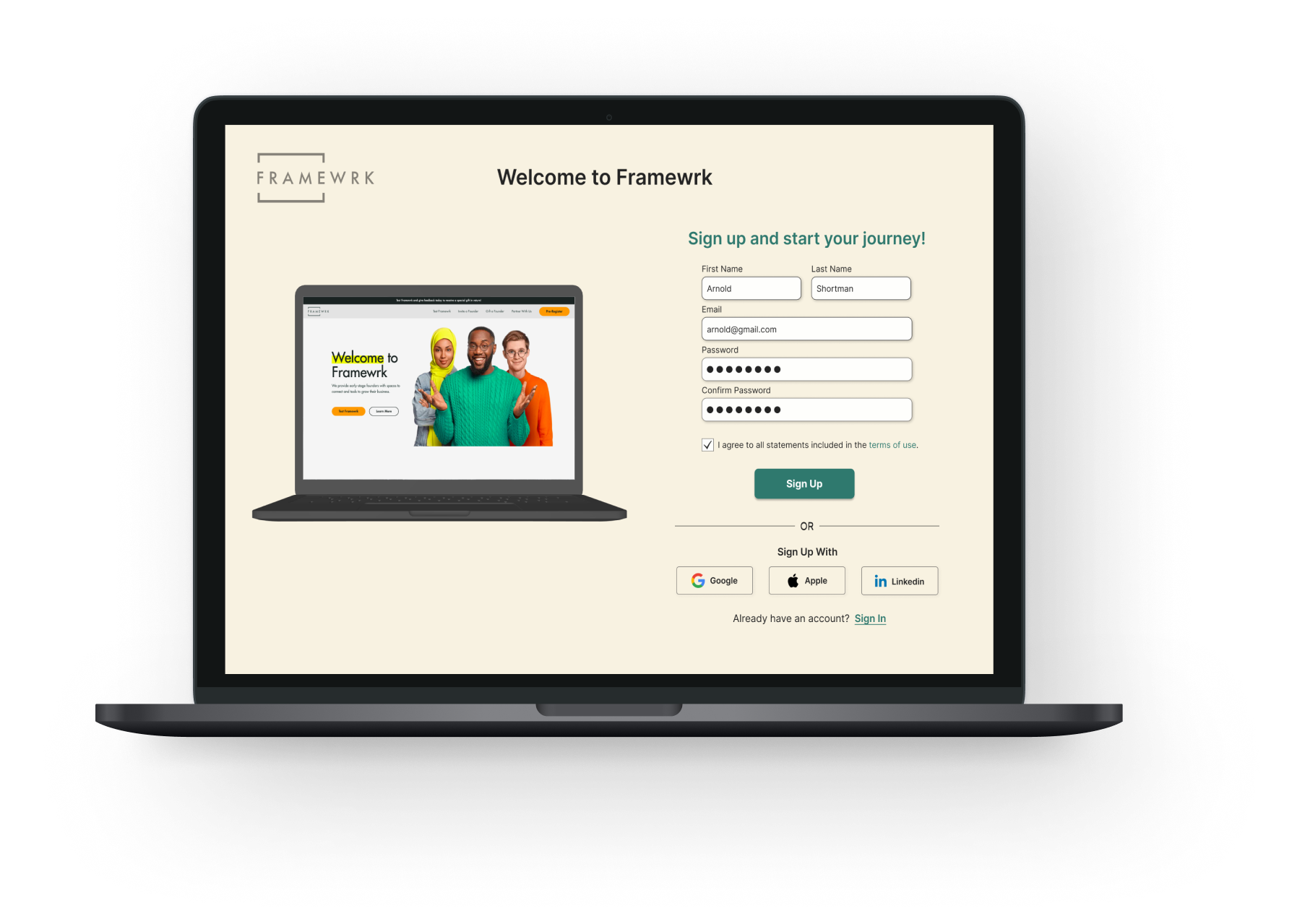
Framewrk is a product that helps startup founders scale their businesses through peer-matched mastermind groups, guidance on organizational structure and contract writing, and an AI business advisor. My team was contracted 5 weeks prior to the soft launch to improve onboarding completion and feature engagement.
I led user research, product design, and content design.
TIMELINE
June - July 2023 (5-week sprint)
USERS
Entrepreneurs and Startup Founders
TEAM
Lead UX Researcher | Lead Content Designer | Product Designer, project manager, 3 generalist designers
SCOPE OF WORK
UX research | content design | product design
Proven success of the minimum viable product launch was critical to securing Framewrk’s next round of funding. Our scope of work encompassed:
addressing why users were not completing the onboarding, which was crucial to peer-matching for its core community feature: mastermind groups
designing and prototyping net-new MVP features
Summary:
improve onboarding completion rates
design for MVP completion with minimal technical debt to adhere to launch schedule
Goals:
The Problems
Framewrk’s one-size-fits-all approach turned off experienced founders
Through our own user interviews and a bevy of informal user research we were provided, we discovered that 45% of users believed that Framewrk was meant for very early-stage founders only. Framewrk was pushing the whole suite of business organizational tools to all users, regardless of business maturity, leading to this impression. The research pointed to this negatively impacting user retention at launch; Framewrk was capturing net engagement metrics, so they were going to see deceptively-low feature engagement as well.
Lack of transparency made users wary of demographic questions
Intake questions on Framewrk are crucial to peer-matching for its core feature: Mastermind Groups. In user tests of the existing onboarding flow, 3/6 users were unwilling to provide details necessary for peer-matching, believing their answers might limit the content and experience on the product.
Insights
Users value and engage with product features depending on needs that correlate to years of business experience (e.g. established business owners of 4+ years are more likely to engage with peers in mastermind groups and less likely to value a guided exercise to create an org chart of their personnel)
User insight:
Business insight:
Broad metrics are not helpful. Framewrk needs to evaluate engagement by type of user
A nuanced understanding of different types of users leads to a tailored onboarding experience with higher completion rates, better engagement goals and tracking, and a direction for product strategy post-launch.
Hypothesis
Solution
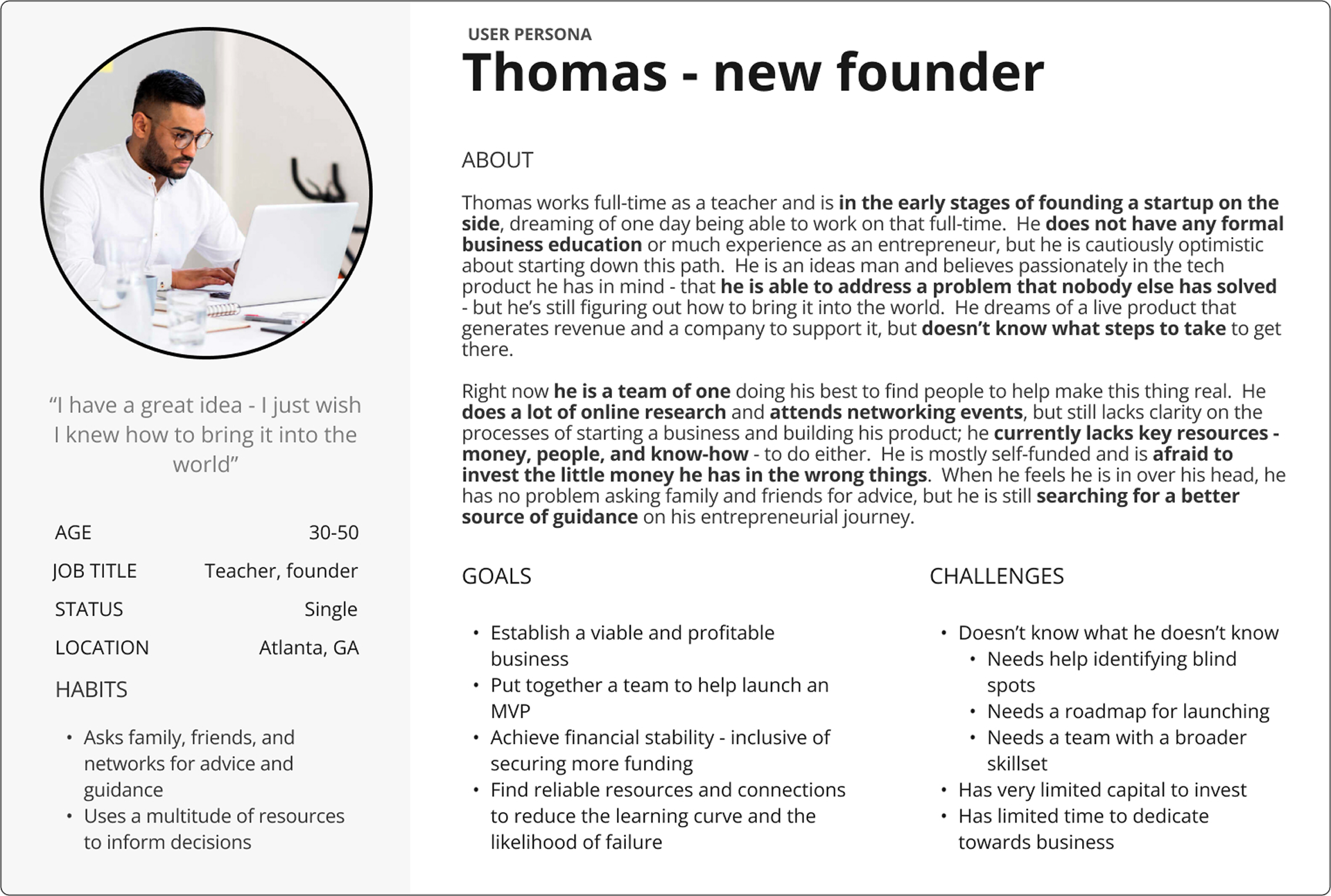
Framewrk needed to go back-to-basics to unlock its own potential: it needed user personas.
There was a lot of data between Framewrk’s research and our own user interviews, but we knew business maturity was the key factor. We used AI to create proto-personas of a beginner entrepreneur and a veteran founder, which allowed us to quickly contextualize and identify further trends in the data. Interview data and Framewrk’s original user research was then synthesized into two fleshed out personas.
Better User Research

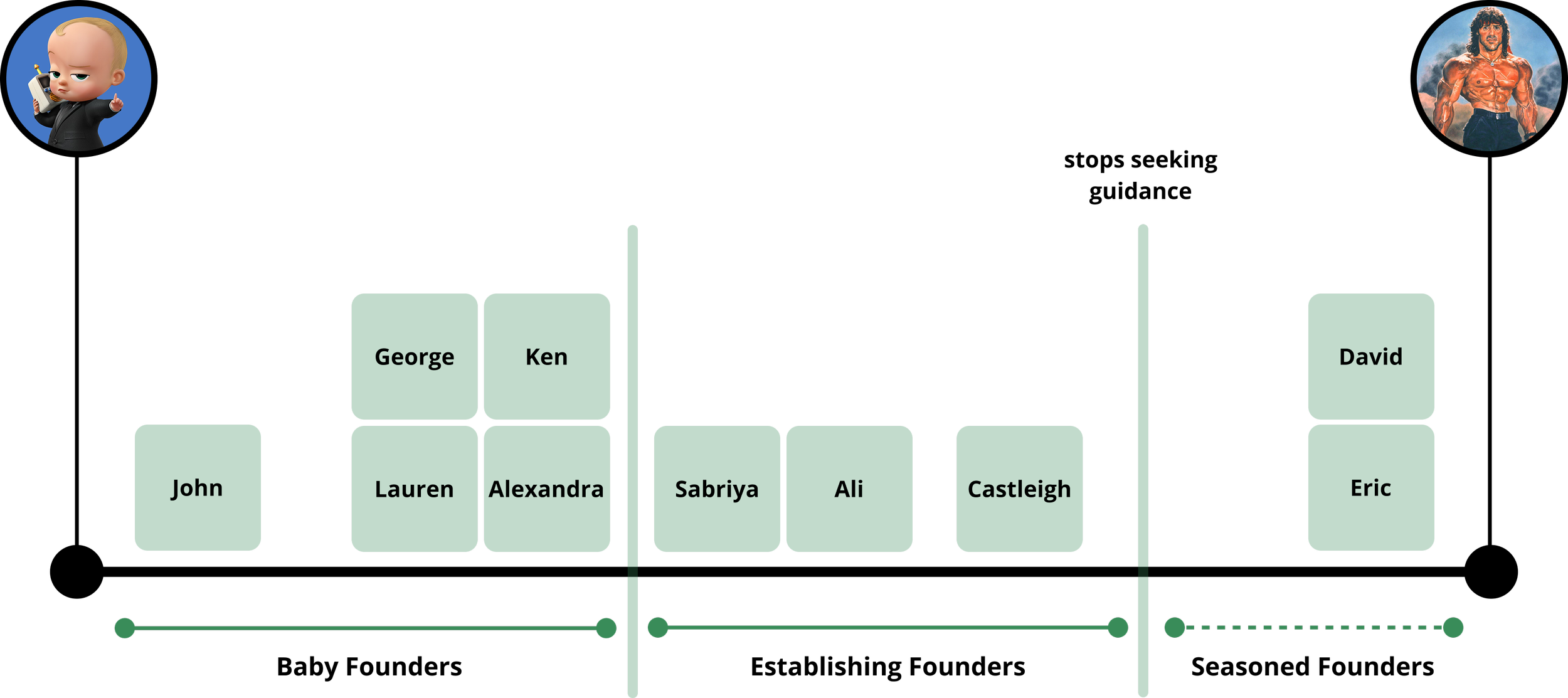
We also identified a third potential user - a highly-experienced founder looking to mentor business owners with less experience. This laid the groundwork for further user research and product strategy.
The first stage of onboarding is an intake questionnaire focused on user demographics. We sought to improve accuracy and completion rates by:
explaining how demographics would be used
focusing identity questions on the business rather than business owner
providing definitions of business terms
removing “skip” options on required questions
replacing checkboxes with radial options for single-answer questions
Improved Onboarding
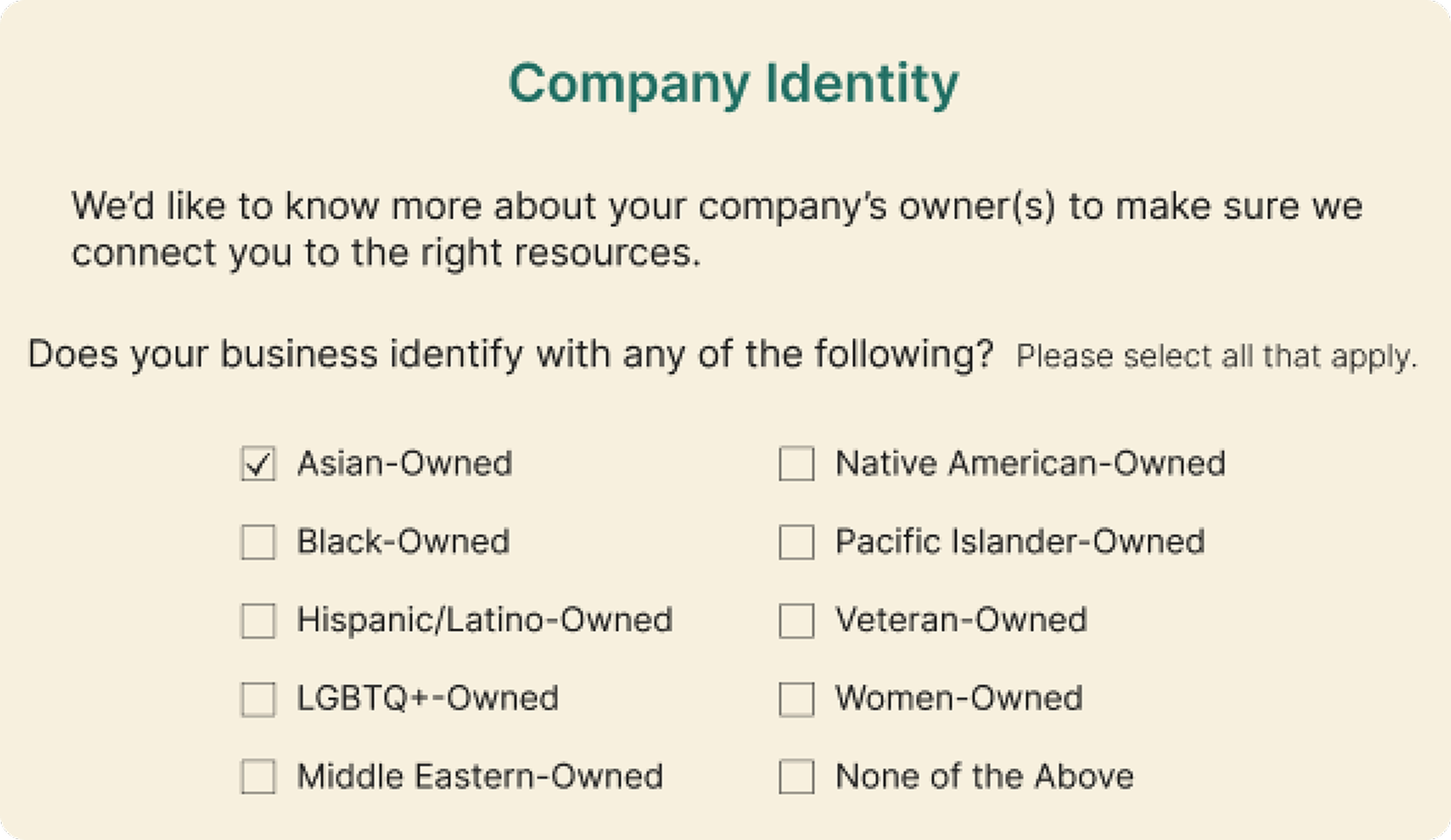
The intake includes a question about the stage of their business, which we used to funnel users to a tour that highlights relevant features to the user based on their needs as a founder. The determining factor was whether or not the founder had a minimum viable product.
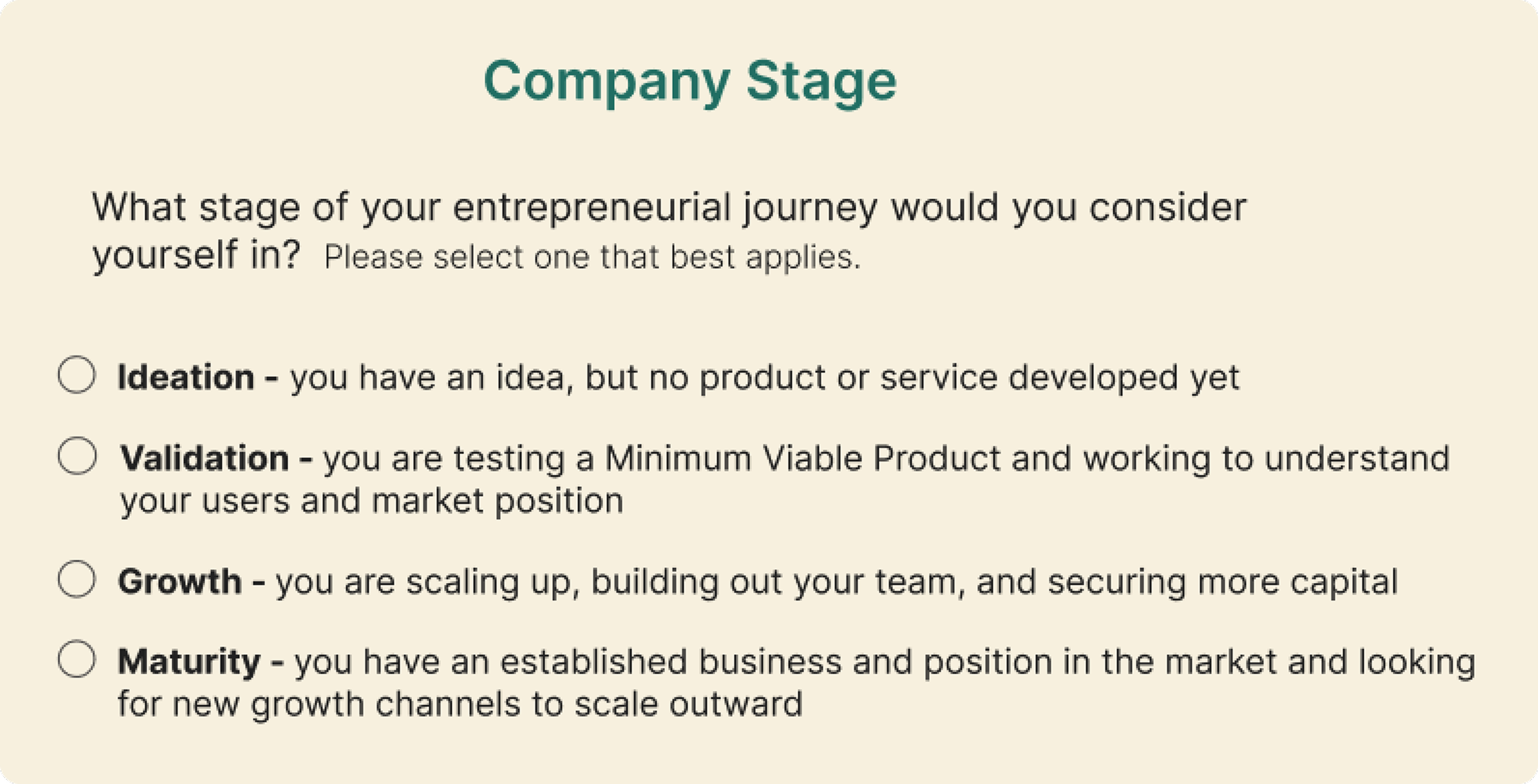
Changes to the intake questionnaire required little effort to implement - they consisted primarily of copy updates and UI cleanup. This was important as engineering resources were spread thin leading up to the launch.
Other artifacts handed off included launch feature prototypes designed per PRDs, as well as a proposed dashboard redesign with improved information architecture and updated colors that pass an accessibility check.
Outcomes
The updated questionnaire and tour performed well in early user tests and qualitative feedback showed no lingering concerns about demographic data being collected.
Completion rate of the questionnaire saw a 21% increase with real users.
We provided an important example of how the product can be tailored to its core users to improve satisfaction and engagement, as well as a foundation for collecting more useful metrics. We were also successful in preventing churn at onboarding.
Not every launch, feature, or UX project requires strict adherence to the basic design process, but this was a great reminder that the fundamentals (like user personas) can be a valuable gut check for product strategy when something isn’t performing as expected.
We accomplished so much with so little in this sprint. This was not a complete design overhaul. The changes made were small and precise to meaningfully impact launch success without affecting the timeline. We threaded that needle beautifully.